Personalized cycling training plans
Why Ride4Life? Because I believe cycling is worth looking at holistically, as a long-term process. The approach helps not only racers but anyone who wants to be healthier, feel better, and make sport part of life — whether as a hobby or for recreation. Not just another training plan among many, but a complete solution to reach your goals.
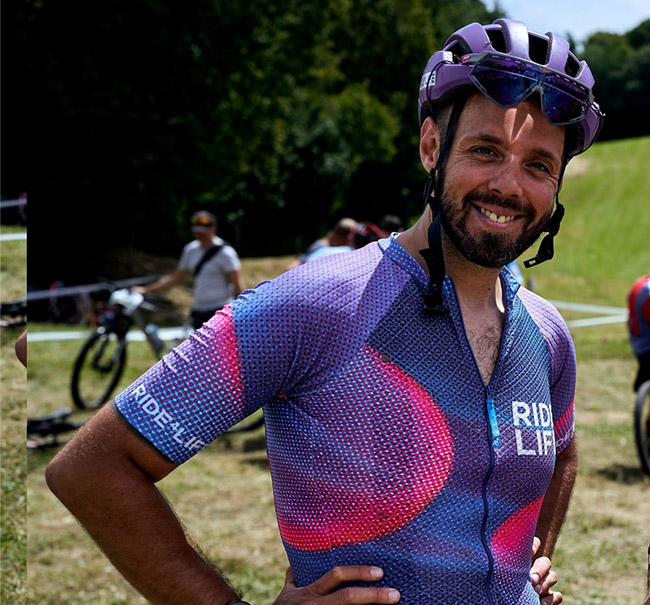
Your partner in progress
Nagy Zsolt - Cycling Coach
My coaching philosophy is built on evidence-based preparation and continuous improvement. I believe that to level up, you need not just miles but deliberate planning and up-to-date professional expertise.
A holistic approach
It takes all performance factors into account, adapts dynamically, and is tailored to your current goals and life. There is no one-size-fits-all plan. Training plan design includes:
A free online training plan cannot deliver on any of these points. There are many advantages to training with a coach — the learning curve shortens dramatically. If you want to know what it takes to get started, begin today.
Get StartedRide4Life Team
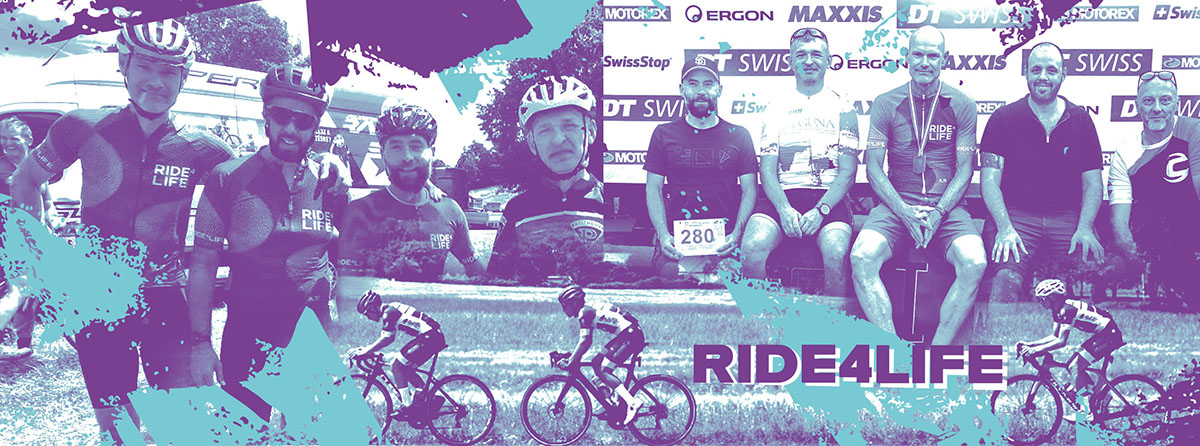
Professional expertise, community strength. The Ride4Life team is built on three pillars so we can deliver our best at every level:
The Next Generation: In our youth development program, we provide a professional pathway and racing opportunities from the youngest ages through U19.
Adult MTB & Road: A community for hobby and elite mountain bikers and road riders, where group rides and professional development go hand in hand. Our MTB athletes have been racing in domestic series for years. Szabó Balázs and Czakó Csaba are regular podium finishers in marathon races and end-of-season stage races.
Ultra Endurance: We give special attention to ultra-distance specialists, where mental strength and precise physiological preparation are key. Our athletes take part in 24-hour races, bikepacking events, and BRMs. We are proud of Szpisjak Bálint and Kiss Tamás „Lószparádé". Bálint has won the Apidura Parallels challenge two years running. Lószparádé does things like the Rapha 500 challenge in a single day on Margaret Island, in the middle of winter — watch the video.
Want to race? We have you covered: as an official sports club, we provide licensing and support for national championship rounds. Our goal is the balance between elite sport and a healthy lifestyle.
At Ride4Life, I believe cycling is not just about kilometers and watts — it is a lifelong investment in health and vitality. In our community, everyone finds their place, whether they are future champions or hobbyists pushing their own limits.
Articles on training and progress
How long does it take to become a better cyclist?
What determines your rate of progress, and how long it takes to build mileage, routine, and long-term endurance.
Read more
I'm an amateur cyclist — what should I do?
How to improve even without diagnostics, a power meter, or a structured training plan — just limited time and plenty of enthusiasm.
Read more
Motivation and cycling
How to stay motivated long term, manage social media pressure, and build a healthy internal feedback system.
Read more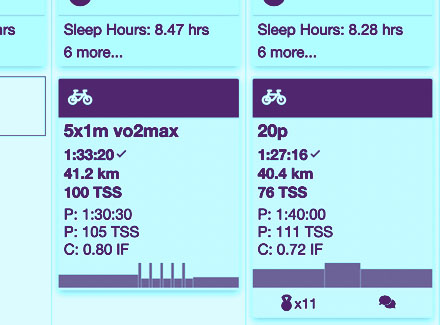
How does a season begin?
When and how to start preparing, and the role of diagnostics, training zones, and TrainingPeaks planning.
Read moreNot just a training plan — a complete development process
Training Plan
What does a cycling workout look like? What should you pay attention to? Every plan is built individually, based on your abilities and goals. Is the same training plan right for triathlon, MTB marathon, XCO, cyclocross, or road cycling? I am a cycling coach who helps with FTP improvement, VO2max development, and performance diagnostics.
Training PlanTracking Results
A training plan alone is not enough if you are not improving. We use several tools to monitor performance — they give excellent feedback on where you stand in your annual plan, when to move from one mesocycle to the next, or which session to skip because you are fatigued. If you are not improving despite training, you are probably working at the wrong intensity or structure.
Performance DiagnosticsLong-Term Performance Development
"Long-term performance development is the deliberately directed process of improving athletic capacity and readiness from the start of competitive sport training through to peak performance. It is a unified process of emphasized, systematic, sport-specific training phases built on one another." Schnabel, Harre, Borde 1994.
What Is Training?
Training is the process by which we systematically develop an athlete's capacity and readiness while protecting health. It helps athletes reach the goals and dreams they set for themselves. Training affects physical education and skill development, technical-tactical preparation, and personal development alike. The structure of a session aligns with its specific objectives and tasks.
Frequently Asked Questions
Why is it worth working with a coach as a cyclist?
One of the most common questions is whether you need a coach or if a plan found online — or even an AI-generated program — is enough.
The problem starts with the fact that a general question — such as how much base training to do, or which zones to train in — cannot be answered precisely without personal data.
Building a training program requires, among other things:
- current fitness level
- age and load tolerance
- sporting history
- health status
- measurement data (heart rate, power, lactate)
Without these, every piece of advice is only general guidance that can easily lead you astray.
Why aren't you improving on the bike despite training?
Many cyclists feel they train a lot but still do not see the level of improvement they expect from the time and energy invested.
Common reasons include:
- training at too high an intensity
- poorly defined training zones
- no periodization
- no feedback loop
👉 A personalized training plan addresses all of these.
What is wrong with online training plans and AI suggestions?
Tools based on artificial intelligence work from vast amounts of information, but they do not see you as an individual athlete.
Their answers typically:
- rely on general patterns
- may include outdated or inaccurate methods
- do not account for individual differences
For example, defining zones from max heart rate is often inaccurate, yet it still shows up frequently in these suggestions. A training plan works well when it is personalized — something a generic model cannot guarantee.
Why doesn't the same training plan work for two people?
Experience and diagnostic data show clearly that even at the same performance level, athletes can differ significantly.
For two cyclists at the same level:
- zone placement may differ
- load tolerance may vary
- adaptation speed may be different
This means what drives progress for one athlete can cause stagnation or overtraining in another.
What does a coach do differently?
A coach does not just hand you a plan — they build a system.
They take into account:
- external load (watts, duration, intensity, conditions)
- internal responses (heart rate, fatigue, recovery, trends)
And most importantly: they monitor continuously and adjust. An experienced coach, for example, can see from heart rate–power ratios or other trends when to change direction, when there is still room to improve, and when there is not.
Why isn't a "good base training plan" enough?
Training is not static. Progress depends on what stimulus your body receives, whether there is still an adaptive response, and when to change — none of which can be fixed months in advance.
A template plan or random online advice cannot respond to how your body is adapting.
So are online training plans pointless?
Not necessarily. Platforms like Zwift or TrainerRoad provide structured systems and can work when used with proper testing.
However, they also have limits:
- they do not see the full picture
- they do not respond to individual problems
- they do not ask follow-up questions
A coach fills in exactly that missing piece.
What is the biggest difference between a coach and "free solutions"?
The most important difference is context and decision-making.
A coach:
- understands why you do what you do
- sees the connections
- adjusts in a personalized way
By contrast, a generic plan or AI only offers patterns, cannot ask clarifying questions, and cannot take real responsibility for the decisions made.
What is the most important takeaway?
If you do not know exactly what you are doing and why, it is very hard to train well. Training is not just numbers — it is physiological processes that change over time, differ from person to person, and require continuous feedback.
That is where a coach delivers real value.